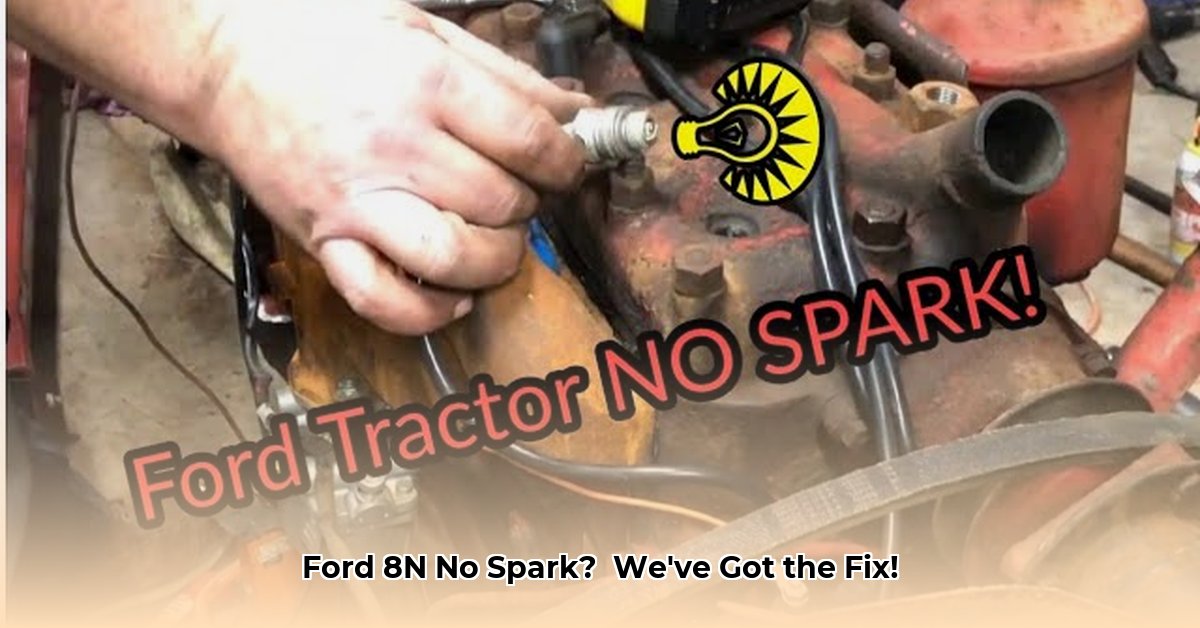
So, your trusty Ford 8N tractor has decided to take a break – no spark, no start. Don't worry! This common problem is often easier to fix than you might think. This guide provides a step-by-step approach to troubleshooting, helping you get your tractor back to work. We'll cover everything from simple visual checks to more advanced diagnostics. For more detailed information on the distributor, check out this helpful resource: Ford 8N Distributor.
1. Visual Inspection: The First Clues
Before diving into complex electrical tests, perform a thorough visual inspection of your ignition system. Think of yourself as a detective investigating a crime scene – you're looking for clues!
- Distributor Cap: Check for cracks, corrosion, or any unusual wear. This is a crucial part of your ignition system, distributing the spark to the cylinders.
- Rotor: Inspect for cracks, corrosion, or burnt spots. This component distributes the spark to the individual spark plugs.
- Ignition Wires: Look for cracks, fraying, or loose connections. A loose connection can easily prevent a spark.
- Spark Plugs: Examine the spark plugs for corrosion, cracks, or excessive carbon buildup. They may need cleaning or replacement.
- Points (if equipped): These act as electrical switches; check for pitting, burning, or excessive wear. Worn points prevent reliable contact. (Note: Many newer 8Ns don't have points.)
- Coil: Inspect the coil for any physical damage; it's the component that generates the high-voltage spark.
Clean any dirty terminals with a wire brush or sandpaper. Tighten loose connections. Often, a simple visual inspection reveals the problem. Could a simple loose wire be halting your tractor?
2. Testing the Ignition System Components
Once the visual inspection is complete, it's time for some more in-depth testing. Safety first! Always disconnect the negative battery terminal before proceeding.
2.1 Points and Condenser (If Applicable)
If your Ford 8N has points and a condenser (common in older models), these require careful attention.
- Point Gap: Use a feeler gauge to check the point gap (your owner's manual specifies the correct gap). An incorrect gap weakens or prevents the spark.
- Point Condition: Inspect the points for wear, pitting, or burning. Worn points need replacement.
- Condenser: While testing a condenser ideally requires a multimeter, a visual inspection for damage (bulging, cracks) can indicate a problem. A faulty condenser can cause intermittent sparking or no spark at all.
Remember, worn points and a faulty condenser are frequent culprits in no-spark scenarios. Replacing these relatively inexpensive components often solves the issue.
2.2 Testing the Ignition Coil
The coil transforms low-voltage electricity into the high-voltage spark.
- Primary Resistance: Use a multimeter to measure resistance across the coil's primary terminals (low voltage side). Your owner's manual provides the correct resistance value.
- Secondary Resistance: Measure the resistance across the coil's secondary terminals (high voltage side), comparing it to the specification in your manual. (Note: Advanced coil testing may require specialized equipment).
An incorrect resistance reading indicates coil failure. Replacing the coil is usually necessary in this case.
2.3. Distributor Cap and Rotor
The distributor cap and rotor distribute the high-voltage spark to the correct spark plug. Even minor damage can disrupt the spark.
- Visual inspection: Check for cracks, corrosion, or carbon tracking. Minor damage can be cleaned, whereas extensive damage necessitates replacement. Replacing these parts is generally a straightforward procedure.
3. Checking Wiring and Grounding
Loose or damaged wiring is a common cause of ignition problems. In addition to visual inspection, carefully examine all wiring connections.
- Connections: Secure all connections at the coil, distributor, spark plugs, and battery. Corrosion can significantly impact conductivity.
- Grounding: Ensure your tractor has excellent grounding. Poor ground connections can completely prevent a spark. Check the ground strap from the engine to the chassis. Clean any corroded connections.
A poorly grounded system often leads to misfires or no spark at all. What percentage of these problems might you solve with a thorough ground wire check? (Hint: A high percentage!)
4. Advanced Troubleshooting
If you've completed the above steps and still have no spark, you might consider:
- Electronic Ignition Upgrade: This upgrade eliminates the often problematic points and condenser, resulting in more reliable ignition.
- 12V Conversion Issues: If your tractor has a 12V conversion, review the conversion work for any errors in wiring or component compatibility. Incorrect wiring during a 12V conversion is a common cause of ignition problems. What are the potential voltage incompatibility issues with a 12V conversion?
When to Seek Professional Help
If you've exhausted all troubleshooting options, don’t hesitate to contact a qualified mechanic. Experienced professionals have the tools and expertise to diagnose issues not covered in this guide. They can pinpoint the problem quickly and efficiently. Is it worth the time and effort to keep troubleshooting if you're still stuck?
Remember, patience and persistence are key. Getting your Ford 8N back up and running is achievable with careful troubleshooting. This guide should help you get started and diagnose many common ignition problems, but always prioritize safety when working on your tractor!